
Utah County
St. George
ELectrician IN LEHI, UTAH
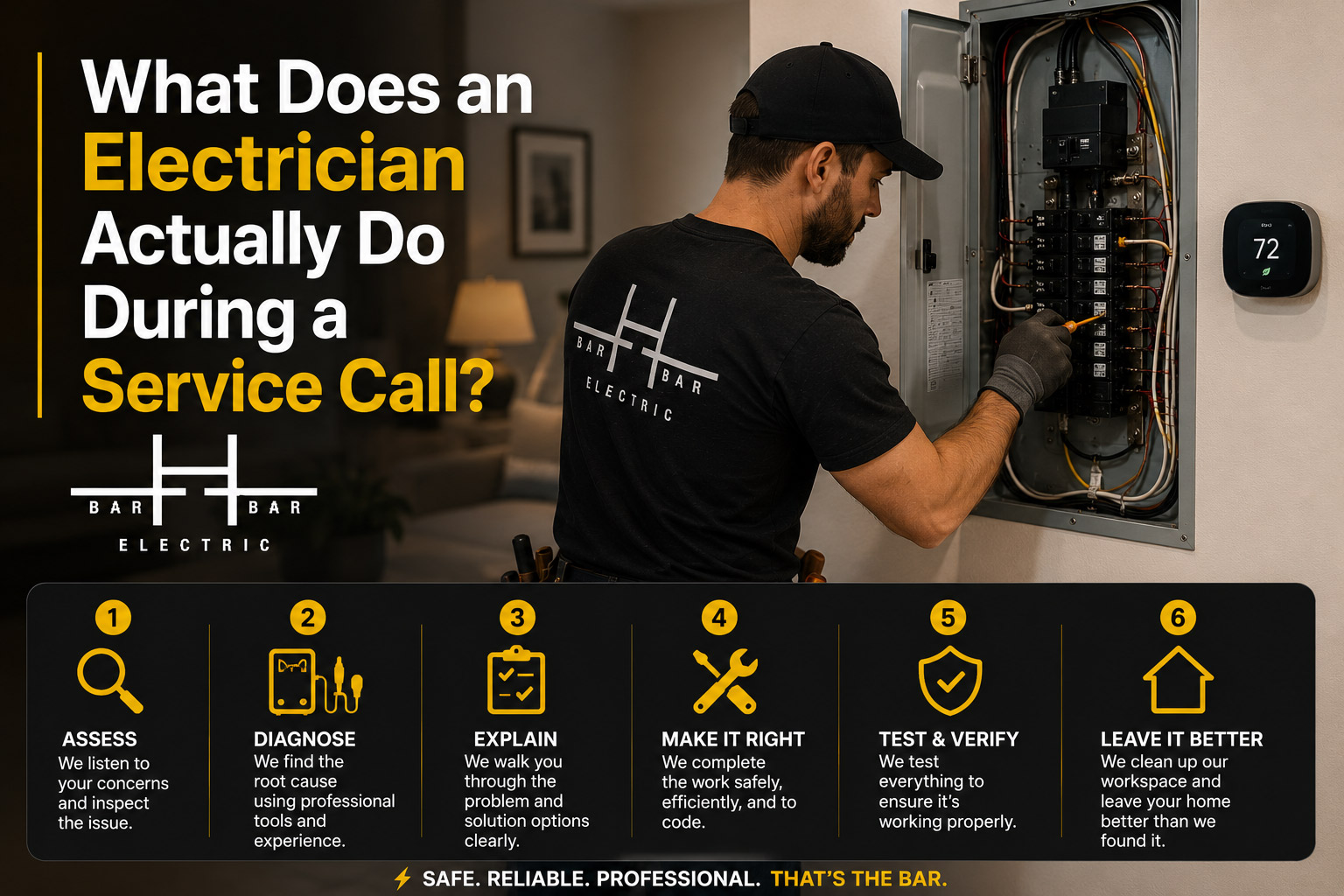
What Does an Electrician Actually Do During a Service Call?
If you've never had an electrician to your home before, the prospect of scheduling a service call can feel vague. What exactly happens? How long does it take? What will they want to look at? These are reasonable questions, and the answers vary based on whether you're calling about a specific problem or scheduling a broader inspection. Either way, knowing what to expect makes the process less intimidating and helps you prepare.
This guide walks through what a residential electrician actually does from arrival to completion, covering both diagnostic service calls and planned work visits.
Before the Electrician Arrives: What You Can Do
A little preparation on your end makes the service call more efficient and helps the electrician give you accurate information. The following steps take ten minutes and can save time during the visit.
Write down the symptoms you've been experiencing, including when they started and whether they're consistent or intermittent
Note whether the problem is isolated to one room, one circuit, or seems to affect multiple areas of the home
Locate your electrical panel and make sure it's accessible — move any storage that's blocking it
If you've had any electrical work done in the past, note who did it and approximately when
Clear access to the areas where the problem is occurring so the electrician can get to outlets, fixtures, or the panel without delay
Homeowners in Lehi, Utah and throughout Utah County who've had their panels updated or circuits added in recent years often have documentation from those projects — pulling that out before the electrician arrives can be genuinely helpful.
What Happens on a Diagnostic Service Call
When you call because something isn't working, the electrician's job is to diagnose the cause before doing any repair work. The diagnostic process follows a logical sequence, though the specific steps depend on the nature of the problem.
Initial Conversation
The electrician will ask questions about what you've observed, how long it's been happening, and whether anything changed before the problem started — a storm, a new appliance, recent work on the home. These details help narrow down the likely cause before any tools come out.
Visual Inspection
A visual scan of the panel, the affected circuit area, and any relevant fixtures or outlets comes next. Electricians are trained to spot things that most homeowners don't notice — burn marks, improperly sized breakers, wiring that was spliced incorrectly, signs of moisture intrusion, or code violations from previous work.
Testing
Using a multimeter, outlet tester, and non-contact voltage tester, the electrician traces the problem systematically. Testing the outlet, then the switch or fixture, then the breaker, then the wiring in between allows them to isolate where the fault is located. This process is methodical and usually can't be meaningfully rushed.
Diagnosis and Recommendation
Once the cause is identified, the electrician explains what they found in plain language and recommends the repair. A good electrician tells you what they found, what fixing it involves, and what it will cost before beginning any repair work. If the problem is more complex than anticipated and requires additional time or materials, that conversation happens before the work continues, not after.
What Happens on a Planned Work Visit
For scheduled projects — outlet additions, circuit installations, panel work, EV charger installation — the structure is different from a diagnostic call. The electrician arrives knowing the scope of work and the visit is focused on execution rather than investigation.
The work typically begins with confirming the plan and any details that affect installation — panel capacity, wall access, location of existing circuits. Materials are staged, power is turned off to the affected circuits, and work begins. For larger projects involving permit inspections, the electrician coordinates the inspection schedule and ensures the work is ready for inspection before calling it in.
Cleanup is part of professional electrical work. A licensed electrician leaves the work area clean, wall covers are in place, no wire is left exposed, and the panel is tidy and properly labeled. If drywall was opened for access, the electrician patches the opening or clearly identifies what needs to be patched if that's outside the agreed scope.
How Long Does a Service Call Take?
Duration depends heavily on the type of call and what's discovered. The following are general estimates for common service call types in Lehi, Utah and surrounding areas.
Diagnostic call for a single non-working outlet or tripped circuit: 45 minutes to 2 hours
Outlet repair or replacement, single location: 30 to 60 minutes
New outlet or circuit addition from existing panel: 2 to 4 hours depending on run length and panel access
Panel inspection and assessment: 45 to 90 minutes
EV charger installation, standard conditions: 3 to 5 hours
Basement rough-in wiring: 1 to 2 days depending on scope
FAQs: What to Expect from an Electrician
Do I need to be home the entire time?
For most service calls, yes — you'll want to be present at the start to describe the issue and at the end to review the work. For longer planned projects where the scope and access are established upfront, some homeowners provide access and return at the end of the workday. Discuss your preference when scheduling.
Will the electrician explain what they found in terms I can understand?
A good electrician should always explain findings in plain language. If you don't understand the explanation, ask for clarification. You're entitled to understand what's happening in your home and what you're being asked to pay for. Don't sign off on repair work you don't understand.
What should I do if the electrician finds something beyond the original issue?
It's common for an electrician performing a diagnostic call to identify additional issues — a circuit that's improperly wired, a breaker that's the wrong size, or a panel with inadequate capacity. Those findings should be presented to you as separate recommendations, not bundled silently into the original repair. You have the right to address them separately or on a different timeline.
Are there things I should fix before the electrician arrives to save money?
No. Don't attempt to fix electrical problems yourself before a service call to show the electrician you tried. Doing so can alter the symptoms, create new safety issues, or cause you to describe a problem inaccurately. Let the professional see the problem as it exists.
What if I disagree with the recommended repair?
You're never obligated to proceed with recommended work after a diagnostic call. A reputable electrician will explain the risk of not making the repair and leave the decision with you. For safety-critical issues, they may decline to restore power to an unsafe circuit, but the repair decision is yours. Getting a second opinion is always reasonable for large or expensive recommendations.
Conclusion
A professional electrical service call follows a consistent, logical process whether it's diagnostic or planned — assessment, explanation, and then work, in that order. Knowing what to expect removes the uncertainty and helps you be a better-informed participant in decisions about your home. Bar H Bar Electric serves homeowners throughout Lehi, Utah with transparent communication at every step. If you have an electrical issue you've been meaning to have looked at, or a project you're ready to move forward on, reaching out for a free quote is the easiest place to start.

Our Services
Helpful Links
Contact Information
Phone
Utah County: (385) 257-3541
St. George: (480) 686-5978
Business Hours
Mon - Fri: 8:00 am - 5:00 pm
Sat - Sun: Closed
© 2026 All Rights Reserved | Bar H Bar Electric
Website Done By: LocalEyes