
Utah County
St. George
ELectrician IN LEHI, UTAH
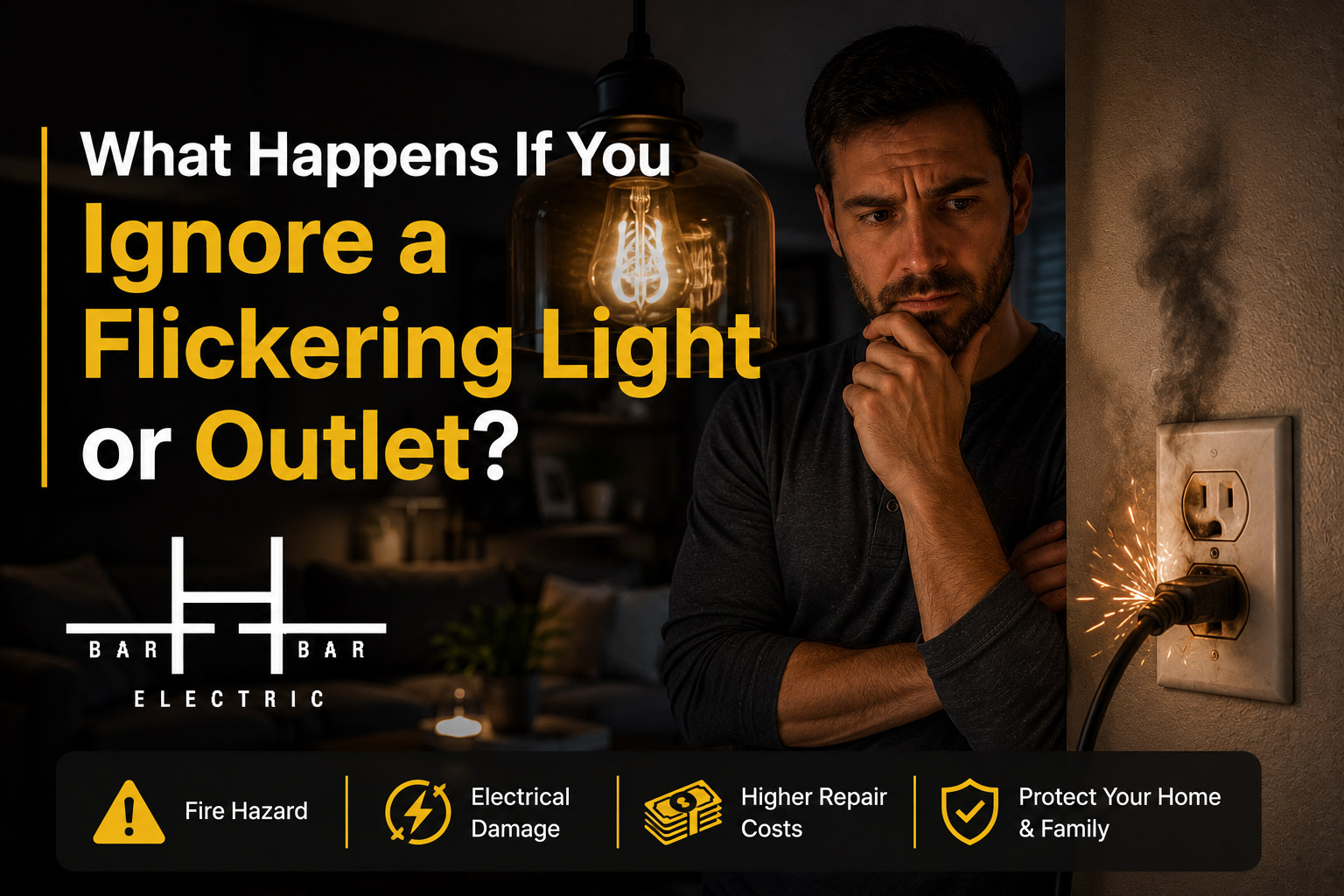
What Happens If You Ignore a Flickering Light or Outlet?
A flickering light is easy to dismiss. Bulb's probably loose. The outlet that stopped working in the spare bedroom? Easy to ignore when the one in the hallway works fine. But these kinds of small, easily rationalized electrical symptoms are often the earliest signs of a problem that doesn't get better on its own — and can become genuinely dangerous.
This guide explains what flickering lights and malfunctioning outlets actually signal, what happens over time if those signals are ignored, and when it crosses from nuisance territory into something a licensed electrician needs to see immediately.
What Flickering Lights Are Actually Telling You
Occasional brief flicker when a large appliance starts up — a refrigerator compressor, an air conditioner, a well pump — is normal. The motor draw creates a momentary voltage dip that the light registers. That kind of flicker lasts less than a second and stops. What's not normal is persistent flickering, flickering that happens without an obvious appliance trigger, or flickering that worsens over time.
Persistent flickering typically points to one of several underlying issues. Loose wiring connections at the fixture, switch, or breaker box create arcing — electricity jumping a small gap — that generates heat and interrupts current flow. Overloaded circuits can't supply stable voltage to all the devices drawing from them. Failing breakers struggle to maintain a clean connection and may allow voltage irregularities to reach the circuit. In older homes in Lehi, Utah and throughout the region, aging wiring with deteriorated insulation adds to the risk.
The Real Risk: Electrical Fires Start This Way
The detail that turns a minor annoyance into a serious concern is arcing. When electricity arcs across a loose connection or through damaged insulation, it generates temperatures that can exceed 10,000 degrees Fahrenheit in the arc itself. The surrounding material — insulation, wood framing, drywall — doesn't need to reach that temperature to ignite. Sustained arcing deposits carbon on contact surfaces, which is itself conductive and allows further arcing. This process can smolder inside a wall for hours or longer before producing visible flame.
The National Fire Protection Association consistently identifies electrical failures and malfunctions — a category that includes arcing from loose connections — as one of the leading causes of residential structure fires in the United States. Homes in Lehi, Utah are not exempt from this risk, and older homes with original wiring face it more acutely.
What Dead or Malfunctioning Outlets Are Telling You
An outlet that stops working is less dramatic than flickering lights but can indicate equally serious underlying conditions. The most common explanations fall into a few categories.
Tripped GFCI Outlet
Ground Fault Circuit Interrupter outlets, required by code in bathrooms, kitchens, garages, and outdoor locations, have a built-in reset function. When they trip, they cut power to themselves and any outlets wired downstream. Finding a tripped GFCI and resetting it sometimes explains a dead outlet elsewhere in the home. If the GFCI trips repeatedly without an obvious cause, that's a sign of a ground fault somewhere in the circuit that needs investigation.
Tripped Breaker
A breaker that trips and doesn't reset fully, or that resets and trips again immediately, indicates an overloaded or faulted circuit. Repeatedly resetting a breaker that keeps tripping is not a fix — it bypasses the protection the breaker is designed to provide.
Failed Outlet or Loose Connection
Outlets wear out. Receptacles that have been plugged and unplugged thousands of times lose their grip on plugs, and their internal contacts can fail. More concerning is a loose connection at the outlet's terminal screws or wire connectors, which creates the same arcing risk discussed above.
When to Stop Waiting and Call an Electrician
Some symptoms demand prompt attention rather than a wait-and-see approach. The following are situations where calling a licensed electrician in Lehi, Utah is the right call rather than a convenience.
Outlets or switch plates that feel warm or hot to the touch
Any smell of burning plastic or a metallic odor near outlets, panels, or fixtures
Visible scorch marks or discoloration around an outlet face
A breaker that won't stay reset
Flickering that has worsened over weeks or months rather than remaining static
Sparks when plugging in a device
Lights that dim noticeably when a specific appliance runs
If you are experiencing any of the above in your home, do not wait for your next scheduled appointment. Call an electrician the same day.
FAQs: Flickering Lights and Bad Outlets
Can I replace an outlet myself if it stops working?
Replacing a failed outlet is legal for homeowners to do in Utah without a permit in most cases, but it requires proper safety precautions including confirmed power-off at the breaker and testing with a non-contact voltage tester before touching any wiring. However, if the cause of the failure isn't known, replacing the outlet without investigating why it failed can leave an underlying problem in place.
How do I know if my flickering is a bulb problem or a wiring problem?
Start by replacing the bulb, especially if it's an LED that may be incompatible with a dimmer switch. If the flickering continues with a new bulb, check whether it happens on other circuits or just the one fixture. Flickering isolated to one light is often a fixture or switch issue. Flickering across multiple fixtures on the same circuit — or throughout the house — points to something upstream, such as the panel or utility connection.
Is it safe to use a dead outlet as storage — just leave things plugged in without power?
Plugging devices into a dead outlet doesn't create a safety risk, but it may obscure the underlying problem and delay a repair. More importantly, if the outlet isn't dead from a failed GFCI or breaker but from a loose connection, it may intermittently restore power, creating a hazard when a device suddenly receives voltage again.
Does homeowner's insurance cover electrical fire damage caused by deferred maintenance?
Insurance coverage for electrical fires varies by policy, but most insurers look at whether the homeowner had notice of an issue and failed to address it. If an inspector or electrician previously flagged a problem in writing and no repair was made, that documentation can complicate a claim. Maintaining records of electrical work and addressing flagged issues promptly protects both your home and your coverage.
What is arc fault protection and do I need it?
Arc Fault Circuit Interrupters (AFCIs) are a type of breaker designed to detect the signature electrical patterns of arcing and cut power before a fire starts. Current electrical codes require AFCI protection for most living area circuits in new construction and in circuits being modified or replaced. Homes without AFCI protection are not automatically in violation, but adding it significantly increases protection against arc-related fires.
Conclusion
Flickering lights and non-working outlets are the electrical system's way of asking for attention. The longer those signals are ignored, the more opportunity a small problem has to become a large one — and potentially a dangerous one. If you've been living with symptoms you've been meaning to get checked, now is the right time. Bar H Bar Electric serves homeowners throughout Lehi, Utah and the surrounding communities. A brief inspection can tell you whether what you're experiencing is a simple fix or something that warrants immediate attention — and give you peace of mind either way.

Our Services
Helpful Links
Contact Information
Phone
Utah County: (385) 257-3541
St. George: (480) 686-5978
Business Hours
Mon - Fri: 8:00 am - 5:00 pm
Sat - Sun: Closed
© 2026 All Rights Reserved | Bar H Bar Electric
Website Done By: LocalEyes