
Utah County
St. George
ELectrician IN LEHI, UTAH
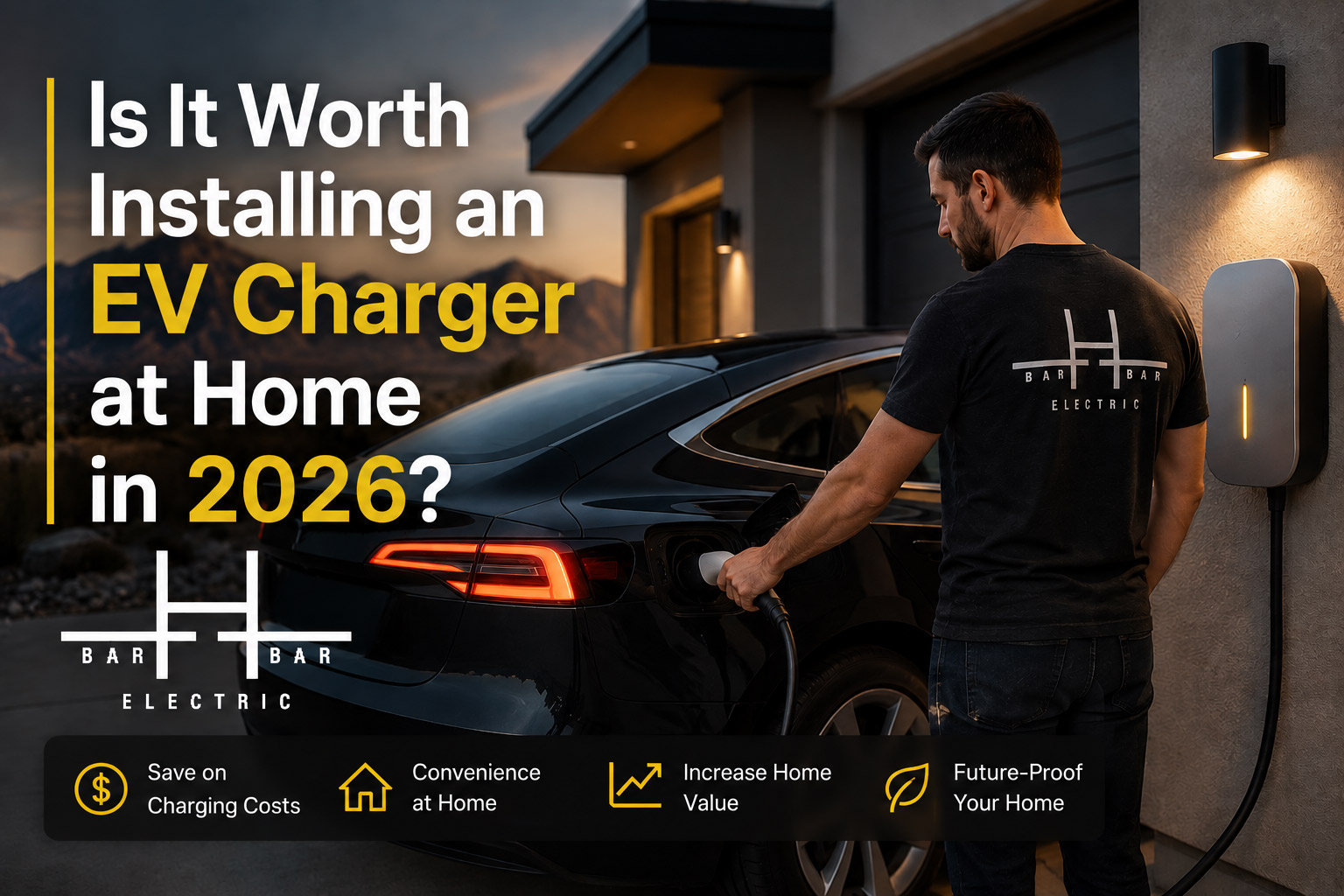
Is It Worth Installing an EV Charger at Home in 2026?
Electric vehicle adoption in Utah has accelerated significantly, and with it, the question of home charging has become a practical one for a lot of households. If you've recently bought an EV or are thinking about it, you've probably wondered whether installing a Level 2 charger at home is actually worth the upfront cost. The short answer is yes for most homeowners — but the reasoning matters, because the value depends entirely on how you use your vehicle and what your home's electrical system can support.
This guide breaks down the real costs, the genuine benefits, and the electrical considerations specific to homeowners in Lehi, Utah and the broader Utah County area.
The Difference Between Level 1 and Level 2 Charging
Every electric vehicle comes with a Level 1 charging cord that plugs into a standard 120-volt outlet. It works, but slowly — typically adding three to five miles of range per hour. For a driver who puts 30 or 40 miles on the car each day, that means plugging in every evening and waking up to a fully charged vehicle. For heavier users, Level 1 isn't enough.
Level 2 charging uses a 240-volt circuit and a dedicated charger unit, commonly called an EVSE (Electric Vehicle Supply Equipment). It adds between 20 and 30 miles of range per hour, meaning most vehicles charge from near-empty to full overnight in three to five hours rather than overnight every night barely keeping up. That shift in practical usability is what makes Level 2 worth considering seriously.
What Does Home EV Charger Installation Actually Cost?
The cost of installing a Level 2 charger at home in Utah breaks down into two components: the charger unit itself and the electrical installation work.
Charger units range from around $300 for a basic hardwired unit to $800 or more for smart chargers with app connectivity, scheduling features, and energy monitoring. For most homeowners, a mid-range unit in the $400 to $600 range offers solid capability without the premium price of top-tier smart options.
Electrical installation costs vary based on your panel's available capacity, the distance from your panel to the garage or charging location, and whether any panel work is needed first. In Lehi, Utah, most straightforward installations run between $400 and $900 for labor and materials. If your panel is older or already running near capacity, a panel upgrade may need to be factored in.
Financial Benefits That Make EV Charging Pay Off
Several financial factors tilt the math in favor of home charging installation.
Fuel Cost Savings
Charging an EV at home is significantly cheaper than fueling a comparable gas vehicle. At current Utah residential electricity rates and typical gas prices, most EV drivers save between $1,000 and $2,000 per year on fuel alone. The savings vary based on the vehicle's efficiency rating and how many miles you drive annually.
Federal Tax Credits
The federal Alternative Fuel Vehicle Refueling Property Credit was renewed under the Inflation Reduction Act and covers 30 percent of the cost of home EV charger equipment and installation, up to $1,000. For a $1,200 total installation, that's $360 back at tax time. Consult a tax professional to confirm your eligibility based on your income and filing status.
Home Value
As EV ownership grows in Utah County, a home with an installed Level 2 charger becomes meaningfully more attractive to a growing pool of buyers. Real estate professionals have noted that EV-ready homes in suburban Utah markets tend to sell more quickly, particularly in neighborhoods with younger buyers.
What Your Home's Electrical System Needs to Support EV Charging
Before scheduling an installation, it's worth understanding what the work actually requires from your electrical system. A Level 2 charger typically runs on a dedicated 50-amp, 240-volt circuit. That circuit needs to be added to your panel, which means your panel must have available capacity.
Many older homes in the Lehi, Utah area were built with 100-amp service, which can accommodate a 50-amp EV circuit but leaves little headroom for other future additions. Homes with newer 200-amp panels typically have no issue. An electrician can assess your panel during a free estimate and tell you whether a panel upgrade is needed before the charger goes in.
Garage placement is also a factor. If your garage is detached or your panel is on the opposite side of the home, the run of conduit and wire adds to the cost. A good electrician plans the most direct route to keep installation clean and cost-effective.
FAQs: Home EV Charger Installation
Can I install an EV charger myself to save money?
Technically some homeowners attempt DIY EV charger installation, but it's not recommended and may not be legal without a permit. Utah requires an electrical permit for new circuits, and unpermitted work can create problems with homeowner's insurance and future home sales. The installation needs to be done by a licensed electrician to be code-compliant.
What charger brand should I buy?
ChargePoint, Emporia, and Enel X JuiceBox are well-regarded options with good reliability records and warranty support. Your vehicle brand may also offer a recommended or compatible charger. An electrician can advise on compatibility with your specific vehicle and home setup, but the charger brand is largely a personal preference choice once you've confirmed compatibility.
Will my homeowner's insurance be affected?
Most insurers simply want to know the charger was professionally installed with a permit. Some policies may require notification of the addition. Contact your insurance provider before or shortly after installation to update your coverage — the conversation is usually straightforward.
How long does installation take?
A straightforward installation — dedicated circuit from a panel with available capacity to a garage on the same wall — typically takes three to five hours. More complex runs or panel work extend the timeline. Most installs are completed in a single visit.
Is a smart charger worth the extra cost?
For many homeowners, yes. Smart chargers allow you to schedule charging during Rocky Mountain Power's off-peak hours, which can lower your electricity costs. They also provide energy usage tracking and remote control via an app. If you're on a time-of-use rate plan or considering one, a smart charger pays for the premium relatively quickly.
Conclusion
For most EV owners in Utah, home Level 2 charger installation is a straightforward financial win. The combination of daily convenience, fuel savings, tax credits, and growing home value appeal makes the investment easy to justify. The main variables are your panel's current capacity and your home's layout, both of which a licensed electrician can assess before any money changes hands. Bar H Bar Electric handles EV charger installations throughout Lehi, Utah and serves the wider Utah County area. Request a free quote to find out exactly what your installation would involve and what it would cost.

Our Services
Helpful Links
Contact Information
Phone
Utah County: (385) 257-3541
St. George: (480) 686-5978
Business Hours
Mon - Fri: 8:00 am - 5:00 pm
Sat - Sun: Closed
© 2026 All Rights Reserved | Bar H Bar Electric
Website Done By: LocalEyes